Pages

December 14, 2011

Marriage: RIP II

Are we really surprised?  I mean, really after Americans or at least as the media would want you to believe were fascinated with a marriage of two Hollywood celebrities (Kardashian and Humphries) that lasted only 72 days?  

America take note.  Marriage, the institution that was designed by God to provide protection and stability for children as they grew and matured into adults, continues to become more rare with every passing year.


The newest number:  51% of Americans are married.

The more disturbing fact is that marriage is no longer viewed as necessary to raise children.  Why get married any more if you're living together and laws allow you to claim the same financial advantages as if you were married.  


US marriage rates hit all-time low

Marriage rates in the US have hit an all-time low, as economic forces and social shifts have pushed couples to delay or avoid matrimony, according to an analysis of census data by the Pew Research Center.

Just 51 per cent of people over age 18 are married today, compared to 57 per cent in 2000 and 72 per cent in 1960, with trends pointing toward wedded couples becoming a social minority within a few years.

“Public attitudes about the institution of marriage are mixed,” the report said. “Nearly four-in-10 Americans say marriage is becoming obsolete,” yet most people who have never married say they would like to some day.

A sharp drop in marriages occurred between 2009 and 2010 when the US economy was in recession, with new nuptials declining 5 per cent. Young people, in particular, drove the rates down, as marriage rates fell 13 per cent among 18 to 24 year olds.

“This trend reflects the changing labour market that young adults face,” said Andrew Cherlin, a sociology professor at Johns Hopkins University. They “think that you shouldn’t get married until you’re positive that you can make a go of it financially.”

Outsourcing and automation of jobs in the manufacturing sector over the last several decades have contributed to the decline of marriages among those with no university education, Mr Cherlin said, with the recent recession and spike in unemployment making the working class even less likely to marry.

Declining job security and the erosion of health and pension plans – benefits that were previously the mark of a promising groom – have also made marriage less appealing.
University-educated people are still getting married, but not until much later, after they have finished school and invested in building their careers. High divorce rates among baby boomers also scared many of their children into skipping or postponing marriage, the Pew researchers said. The age of first marriage rose higher than ever in the last year to an average 26.5 years for women and 28.7 for men.

Instead, couples are living together and having children without getting married. Cohabitation, living alone and single parenthood have all grown more prevalent, the report said.
The trends are consistent in other countries as well.
“The United States is by no means the only nation where marriage has been losing ‘market share’ for the past half century,” the researchers said. “The same trend has taken hold in most other advanced post-industrial societies.”

Clair Brown, an economics and public policy professor at the University of California at Berkeley, said that these sociological trends are often beneficial for the economy. People who stay in school longer and wait to have children get better jobs and have more mature relationships, she said.
Many European countries have recognised that and granted the rights of the married to cohabiting couples, she said, adding that the US would benefit if it followed their lead.

“Let’s take Sweden. Everyone cohabitates in Sweden and the state doesn’t treat you any differently,” she said. “When will the US government catch up with the social norms?”

Daniel's Fast: Day 3, A Modern Day Daniel

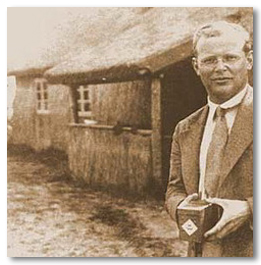
Bonhoeffer: Pastor, Martyr, Prophet, Spy: An Interview with Biographer Eric Metaxas


A Q&A with the author and speaker Eric Metaxas on his new book, Dietrich Bonhoeffer: Pastor, Martyr, Prophet, Spy.  Some of the highlights below.
  • What Bonhoeffer cared about was what God required of him. His life and theology were inextricably intertwined; his theology was his life.  So as I say, it was his fealty to God that led him to the gallows.
  • Bonhoeffer understands that our lives and our theology have to be one thing. It’s one reason that in his theology he stresses the Incarnation as he does.
  • Christ did not suggest loving one’s enemies — theological or otherwise — he demanded it.  Bonhoeffer showed love towards his theological opponents. He refuted them logically, but respectfully.
  • It’s something like Mark Twain’s statement that a lie can get half-way around the world before the truth can get his shoes on.
  • We want to gravitate towards eccentricities and exaggerations. But as I say, Bonhoeffer wants to pull us towards the center, towards Christ who judges AND forgives. “Christ the center” as a theological method is a reflection of Bonhoeffer’s life and theology.
  • That was certainly Bonhoeffer’s goal, to lead people to Christ, the “man for others.” 


This man was purposed his entire life.  Coming from a family of doctors and intellectuals, he turned away from the path that was set before him like the movie Adjustment Bureau and sent out to discover his passion and the purpose that God had meant for his life to become.  He wanted to study theology and study he did.  His works led him to disciple young men in developing into sincere Christian men of faith before many of them entered into war.  He never pastored one church, but instead started his own seminary of sorts and his active Christian faith led him to oppose the corrupting attempts to remove Christ from the church in Germany in the years pre-WWII.

In the end, his faith led him to try and attempt to save the lives of the innocent that were being murdered all over Germany by attempting to assassinate Hitler in an attempt that was known as Valkerye, of which a movie has been made related to this action.  The failed assassination ultimately led to his imprisonment and death by a German shooting squadron just days, I believe 19 days, before the Germans were defeated and the war ended.

Such was a man whose life commanded the utmost of devotion to the God who saved his soul.

December 13, 2011

Daniel's 10 Day Fast: Day 2

We shall not fight our battles alone.  There is a just God who presides over the destinies of nations, and who will raise up friends and fight our battles for us."

Patrick Henry March 23, 1775

Destiny.

Your destiny.  The destiny of nations, the destiny of mankind.  We each have one.  The founders often believes that we all played a part in the development of human history.  Our act was one act in a multiple act play.  We each have a piece of the multi-movement music piece to play.  The founders understood this and that is why they took their role so seriously in challenging the British and attempting to establish a nation free and independent of the Queen's rule.

So much so that in 1774 the congress resolved to "discourage every species of extravagance and dissipation, especially all horse-racing, and all kinds of gaming, cockfighting, exhibitions of shows, plays and other expensive diversions and entertainments."

They wanted God's favor and did not want anything to interfere with this favor.  

The old testament prophets understood their roles.  Some were born during Israel's darkest days and were called to call out to strengthen Israel while calling out heir sin (Ezekiel).  Others like Daniel were called to serve in positions of leadership among Israel's captives and document the wonders of God to a pagan society.  

Still others faced trials of many sorts, all within the purpose that God had for them.  Many like those below, faced those trials and 'accomplished' little in the eyes of the world, but served out the purpose God had laid out for them. 

Hebrews 11:32-40
And what more shall I say? For the time would fail me to  tell of Gideon and Barak and Samson and Jephthah, also of David and Samuel and the prophets:  who through faith subdued kingdoms, worked righteousness, obtained promises, stopped the mouths of lions, quenched the violence of fire, escaped the edge of the sword, out of weakness were made strong, became valiant in battle, turned to fight the armies of the aliens.  Women received their dead raised to life again.  Others were tortured, not accepting deliverance, that they might obtain a better resurrection.  Still others had trial of mockings, and scourging, yes, and of chains and imprisonment.  They were stoned, they were sawn in two, were tempted, were slain with the sword.  They wandered about in sheepskins and goatskins, being destitute, afflicted, tormented,

of whom the world who was not worthy. 

They wandered in deserts and mountains, in dens and caves of the earth.  And all these, having obtained a good testimony through faith, did not receive the promise, God having provided something better for us, that they should not be made perfect apart from us.  

Daniel's 10 Day Fast: Day 1

Daniel 1:5

"Please test your servants for ten days, and let them give us vegetables to eat and water to drink.  Then let our appearances be examined before you, and the appearance of the young men who eat the portion of the king's delicacies; and as you see fit, so deal with your servants."

Do we check our appearance in the mirror every morning?  Do we look out at the sun and see a sun coming up and hear the birds singing? 


Life so often is missing the joy that we should be experiencing.  So often, it is because of internal conflict that eats us up like a termite chomping away at the foundation of your house while you sleep.  While a physiologist will tell you that you need more reflective time with yourself and nature or that the harmony between your spirit and nature is not in line, may I offer another suggestion? 

The questions you face are deeper--they are the longings of a human heart toward the things of the Eternal.  Our lives are destined for a greater purpose.  This purpose though does not necessarily shout out to us, "Here!", but rather whisper to us in the form of internal joy.  This purpose to life can only be found outside of ourselves in the God who gave us a mind and spirit to use to glorify him.

Questioning life?

Take 10 days. Fruits, Vegetables, what have you.  Become a Methodist in a way, implementing some method in which to clear your mind, practice restraint, and separate yourself like Daniel did.  In doing so, the Lord will revel himself to you in powerful ways.

December 8, 2011

2011 Pictures of the Year

National Geography has published the finalist for the 2011 pictures of the year.  Below is a sneak peak:  Catch the full list here: Pictures National Geo

Also, commentary from theblaze.com


In a mud pool at the sea salt mines near Bourgas, Bulgaria locals gather. He applies the mud from the pool and then stands upright until it is dry only to take a dip in the nearby sea. Afterwards he gets a relaxing swim in the 30cm of water in the salt mine (80-90% pure salt). Photo and caption by Antoni Georgiev/National Geographic Photo Contest


An unexpected side-effect of the 2010 flooding in parts of Sindh, Pakistan, was that millions of spiders climbed up into the trees to escape the rising flood waters; because of the scale of the flooding and the fact that the water took so long to recede, many trees became cocooned in spiders webs. People in the area had never seen this phenomenon before, but they also reported that there were fewer mosquitoes than they would have expected, given the amount of standing water that was left. Not being bitten by mosquitoes was one small blessing for people that had lost everything in the floods. Photo and caption by Russell Watkins/National Geographic Photo Contest


December 7, 2011

Swiss Rocket Man, Hydro-Jetpack, and Human Robots

Technology has absolutely exploded recently.  We are the internet and travel age.  Anything we have dreamed the future to be is coming to pass before our eyes.  At the same time we are experiencing the blessings of the mind's potential in ways that only God foresaw years ago, we are also more spiritually lost than ever before, turning to technology during our quiet hours instead of to the God who gave us life.  Long ago, the words were sealed as the angel spoke to Daniel that this type of technology would be present in the time of the end.

Daniel 12:4
"But you, Daniel, shut up the words, and seal the book until the time of the end; many shall run to and fro, and knowledge shall increase"

These technologies are very raw, but absolutely stunning in their development.  Can you imagine strapping on a rocket to go to work?  How about sending in your robot double on your sick days? Give it another 20 years and we may just be able to do such a thing.

Swiss Rocket Man


Hydro--Jetpack Man


Human Robot


December 5, 2011

Peter Hitchens: The Testimony of a Converted Atheist

"This country ceased to be Christian, in terms of genuinely, consciously, in an educated way believing in the Christian faith after the first world war.  People still continue to behave as if they are Christians. Society continues to function as if it is a Christian society for some time after its been gone.  We have been living in the last 40-50 years in the afterglow of Christianity.  Eventually though, eventually the darkness falls."

December 4, 2011

Boko Haram Threat: Nigeria & the USA

Boko Haram is the latest terrorist network to arise, based in Nigeria with extensive ties to Al-Quada and Hezbollah.  Boko Haram presents yet another threat to freedom and democratic systems of governing within the region.  With the Muslim Brotherhood increasing its footprint in Egypt, Libya in turmoil, and radical Shiite Islamists in charge of Iran, the middle east and Africa presents the rest of the world with a cauldron of instability. 


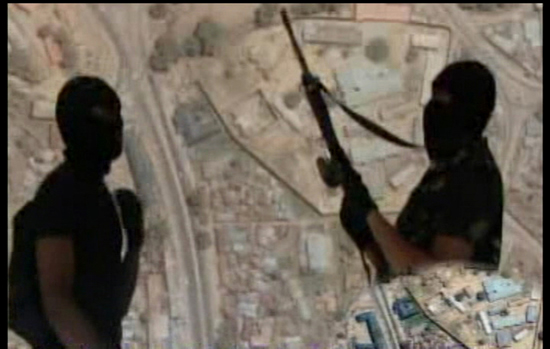
Boko Haram Threat


A screen grab made on October 21, 2010 in Kano from a video allegedly released by the Nigerian Islamist sect Boko Haram in northern Nigeria reportedly shows two alleged sect members standing against a background of a Google Earth shot of the northern Nigerian city of Bauchi with the triangular city prison visible. Boko Haram ‘spokesman’ claims responsibility for the attack on the UN building in Abuja that killed 18 on August 26, 2011.
It’s about time Congress started paying more attention to terrorism in Nigeria.
This morning, Congressman Patrick Meehan (R–PA), chairman of the House Homeland Security Subcommittee on Counterterrorism and Intelligence, announced that the Nigerian Islamist sect Boko Haram poses an emerging threat to U.S. interests and the U.S. homeland.

The hearing coincided with the subcommittee’s release of a report outlining Boko Haram’s evolution, rapid escalation of attacks, and ties with al-Qaeda. The report recommends that the United States provide diplomatic, military, and intelligence support to Nigeria in addition to investigating whether Boko Haram should be listed as a foreign terrorist organization.

These steps are a welcome start. However, Congress should ensure that increased engagement with Nigeria as well as the resources the U.S. provides are used effectively and that the Nigerian government makes meaningful progress in addressing this threat.

The Nigerian government does not have a good track record in combating Boko Haram. In July 2009, a raid by Nigerian security forces in Bauchi state killed 700 people and resulted in the extrajudicial killing of Boko Haram’s founder, Ustz Mohammed Yusuf. Following the raid, Boko Haram vowed to regroup and escalate its attacks against the Nigerian state.

In the past year Boko Haram has waged frequent attacks against government forces and civilians across northern Nigeria and in the capital city of Abuja, committing its first international attack against U.N. headquarters last August.

Nigeria’s security forces have a history of unprofessional and brutal conduct. Civilians across the north often fear government soldiers as much as they fear Boko Haram. The Nigerian government has combined brutal tactics with prospective attempts to negotiate with the militants.
Last August, Nigerian President Goodluck Jonathan appointed seven government officials to explore various options in dealing with the organization. In September, the committee urged the government to engage in open talks with militants despite its bloody acts. Yet doing so would only grant Boko Haram legitimacy.

The Nigerian government has also failed to address the marginalization of Nigeria’s northern populations. Much of this is owed to the stark sectarian divisions within the country, as it is split between Christians residing in the south and Muslims in the north. As a Christian who is believed to have stolen last April’s presidential election by northerners, Jonathan has not addressed the challenges that northern populations face, including unemployment, lack of education, and widespread poverty.

The Nigerian government’s scattered approach to combating Boko Haram should concern the United States. While Boko Haram does not pose an immediate threat to the U.S. homeland, that doesn’t mean that it won’t in the future. The Nigerian government should take the threat that Boko Haram poses more seriously.

It was only a few weeks ago that Nigerian national security advisor General Owoeye Andrew Azazi criticized the United States for activating a security alert, as it was believed that Boko Haram posed an immediate threat to U.S. citizens. While the U.S. later withdrew the alert, the Nigerian government should not have questioned America’s duty to protect its citizens.
When exploring engagement with the Nigerian government as well as the distribution of assistance, the United States should make sure that Nigeria is a responsible partner. This will require the Nigerian government’s progress toward improved governance and addressing domestic concerns.

Top Pictures from 2011

Check it out: The top photos from 2011. 


PRODIGAL and America's Police State

Posterity! you will never know how much it cost the present generation to preserve your freedom! I hope you will make a good use of it. If you do not, I shall repent in Heaven that I ever took half the pains to preserve it.

John Adams  

Do we naively believe believe that every governing official has in their decrees and laws the best interests of its citizens?  Could it possibly be that many bureaucrats are corrupted by power or that immoral, apathetic officials could potentially use what was meant for good into something meant for evil?


Man is not perfect and leaders throughout history, most notoriously Hitler, have used the democratic process to achieve ruthless and evil ends.  Do not forget that ruling law in 1940 said that one particular people was an inferior race and must be eliminated.

If we fail to stop excessive power and control at its infancy, it will grow and once it becomes a big enough ship to sail the sees of crisis with stealth efficiency, watch out.  One captain, acting in the best interest of the boat may deem it necessary to throw certain people, especially those who dissent, overboard.

Technology is granting new and new powers to those in government to monitor your every actions.  The technology below is new, and appears to be potentially in the sights at our favorite government agencies, the Department of Defense, Homeland Security, and the National Security Administration.
RODIGAL -- the Proactive Discovery of Insider Threats Using Graph Analysis and Learning -- which has been built to scan IMs, texts and emails . . . and can read approximately a quarter billion of them a day.
 
This might just be the cherry on the top of the ice cream cone.  The Patriot Act already allows these agencies to monitor our phone without a warrant and perform surveillance on houses at any time among other things.  Now they can access our emails and monitor our daily web use. 

Disturbing.

Couple this with a new bill apparently giving the ability to arrest American citizens on U.S. soil, send them to Guantanamo indefinitely with no representation or court proceedings and a president and attorney general who are far from benign, and you have the makings of a police state, where opposition is termed treason.


Could the U.S. Government Start Reading Your Emails?

Georgia Tech Email study
Cherie Anderson runs a travel company in southern California, and she’s convinced the federal government is reading her emails. But she’s all right with that.
“I assume it's part of the Patriot Act and I really don't mind,” she says. “I figure I'm probably boring them to death.”
It's likely Anderson is not alone in her concerns that the government may be monitoring what Americans say, write, and read. And now there may be even more to worry about: a newly revealed security research project called PRODIGAL -- the Proactive Discovery of Insider Threats Using Graph Analysis and Learning -- which has been built to scan IMs, texts and emails . . . and can read approximately a quarter billion of them a day.
“Every time someone logs on or off, sends an email or text, touches a file or plugs in a USB key, these records are collected within the organization,” David Bader, a professor at the Georgia Tech School of Computational Science and Engineering and a principal investigator on the project, told FoxNews.com.
PRODIGAL scans those records for behavior -- emails to unusual recipients, certain words cropping up, files transferred from unexpected servers -- that changes over time as an employee "goes rogue." The system was developed at Georgia Tech in conjunction with the Defense Advanced Research Projects Agency (DARPA), the Army's secretive research arm that works on everything from flying cars to robotic exoskeletons.
Initially, PRODIGAL will scan only the communications of military volunteers and people who work in federal agencies. But the very existence of such a project is sure to unnerve citizens like Anderson. Is the government reading my emails? Are they already monitoring me?
"Some people say it's one step further toward a police state," said Anthony Howard, a book author and security expert who has consulted for the Department of Homeland Security.
But Bader and other experts are quick to dismiss the idea that PRODIGAL could be used to monitor everyone in America. The scans work only on internal systems, they say -- not across the entire Internet. And the experts say such a project is long overdue: by monitoring for "anomalies" and predicting extreme behavior, catastrophes can be prevented, such as a soldier in good mental health becoming homicidal or a government employee sharing key classified information.
“Today, an analyst may receive tens of thousands of 'anomalies' per day, where an anomaly is an unexplained event,” Bader said.
The new system is designed to aid analysts in processing those anomalies. And it's not alone.
Bader equated the PRODIGAL system to Raytheon SureView, an internal scanning system that looks for suspicious activity and alerts federal agencies about possible threats. Another system is the Einstein project, which was developed after 9/11 and scans government employees for key words and links suspicious activity to National Security Agency databases.
But PRODIGAL scans vastly more data than those systems: as much as a terabyte or more per day, what Georgia Tech described as "massive data sets."
PRODIGAL is part of an existing DARPA security project called Anomaly Detection at Multiple Scales (ADAMS), which was announced earlier this year. Details about how ADAMS works are not widely known; Georgia Tech's recent announcement is one of the first reports to explain how these detection engines work.

According to Bader, PRODIGAL uses complex "graph-processing" algorithms to analyze threats and piece together a jigsaw puzzle of communications. The system then ranks the unusual activity before feeding the most suspicious threats to agents.
Cyber-security expert Joseph Steinberg, CEO of Green Armor Solutions, said ADAMS is unique in that it scans through a massive stream of data. He says the new project, which will take about two years to develop and will cost $9 million, will be more effective at analyzing threats and determining if they are valid.
But the issue is not the scanning technology itself; it’s how the information is interpreted -- and whether it ultimately helps at all, Howard told FoxNews.com.
"Since there is no real data publicly available to substantiate that any of this technology is preventing terrorist attacks or strengthening our borders from within, [we can't] really say definitively that this technology is doing any good," he said.
The challenge, he said, is that criminals and terrorists often use multiple channels of communication, some encrypted -- and know how to avoid existing detection systems.
Nevertheless, PRODIGAL’s ability to scan reams of data is clearly the next step in tracking unusual activity, and it’s guaranteed to raise a red flag for Anderson and others.
"Since people tend to be imperfect, the data captured can easily be mishandled. Where does it end?" Howard said.